Stop cheering for rate cuts. Cheap money is what made everything expensive.
Everybody wants the Fed to cut. But a decade of near-zero rates inflated houses, stocks, and groceries alike — and savers paid for the party.
Opinion: this column argues a point of view. It is commentary from the BidAsk opinion desk — not a news report, and not financial advice.
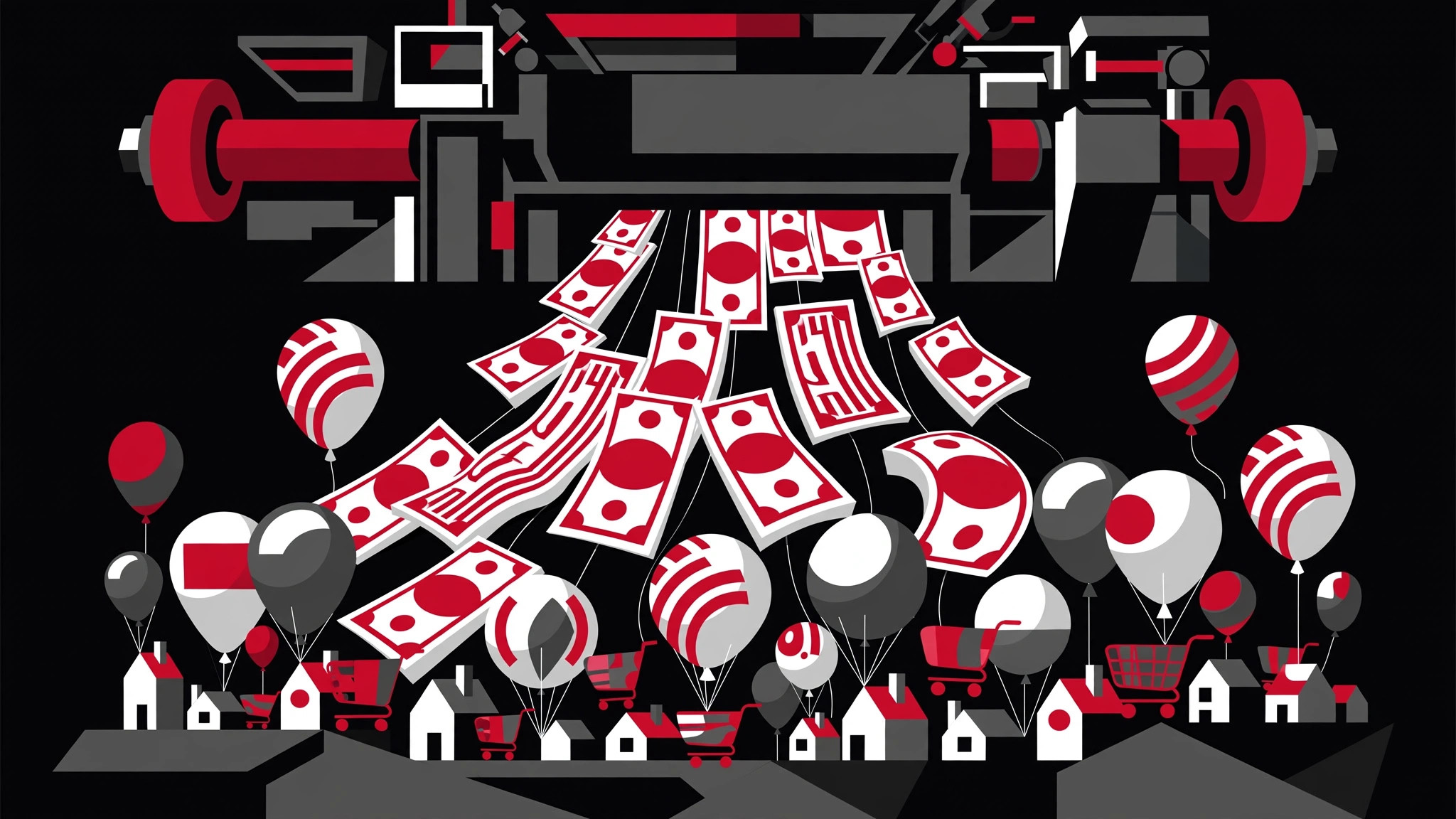
Every time the Fed hints at cutting interest rates, Wall Street pops champagne and homebuyers start refreshing Zillow. I get the appeal. Cheaper borrowing sounds like relief.
But let's be honest about what a decade-plus of cheap money actually bought us: houses nobody under 40 can afford, a stock market priced for perfection, and the worst inflation in forty years. Cheering for rate cuts now is like asking the bartender for another round when you're already hung over. The medicine and the disease are the same thing.
Cheap money doesn't create wealth. It moves it.
When rates sit near zero, borrowing is nearly free — for people and institutions that can already borrow. Corporations loaded up on debt to buy back their own stock, juicing share prices. Private equity firms borrowed billions to buy houses, dental practices, and trailer parks, then raised the rents. Asset owners got richer. Everyone else got the bill in the form of higher prices.
This isn't a conspiracy theory; it's arithmetic. When money costs nothing, the price of everything money can buy goes up. Your wages didn't keep pace because wages are sticky and assets are not.
Savers were the sacrificial lambs
For most of the 2010s, a savings account paid effectively zero while inflation — even the official, hedonic-adjusted, owner's-equivalent-rent version — ran at 2% or more. That means anyone who did the "responsible" thing and saved cash was guaranteed to lose purchasing power every single year, by design. The Fed will tell you this was necessary to support employment. Maybe. But let's name the transfer for what it was: from prudent savers to leveraged borrowers.
Now that rates are finally normal — the 10-year Treasury near 5%, the highest since 2007 — savers are earning real returns again, and suddenly everyone treats 5% like a crisis requiring emergency cuts. It isn't. Five percent is roughly the historical norm. Zero was the aberration.
Rate cuts won't fix what actually hurts
Here's the uncomfortable part: the things squeezing household budgets — housing, healthcare, childcare, college — are supply problems, not interest-rate problems. Cutting rates doesn't build more houses. It doesn't train more nurses. What it does is make mortgages cheaper, which bids house prices right back up, leaving buyers paying the same monthly payment for a more expensive house while sellers pocket the difference. We've run this experiment. We know how it ends.
If you want affordability, you want stable money and abundant supply. Rate cuts deliver neither.
What I'd rather see
A Fed that treats price stability as the actual mandate — not a talking point to be traded away the moment markets wobble. An economy where saving is rewarded instead of punished. And a public conversation that stops treating every rate decision like a stimulus check and starts asking who really benefits when money gets cheaper.
Spoiler: it's never the person clipping coupons.
So the next time markets rally on cut hopes, ask yourself: are you cheering because your life gets better — or because asset owners' lives get better and you're hoping some of it trickles down? We've been promised that trickle for fifteen years. Check your grocery receipt and tell me how it's going.