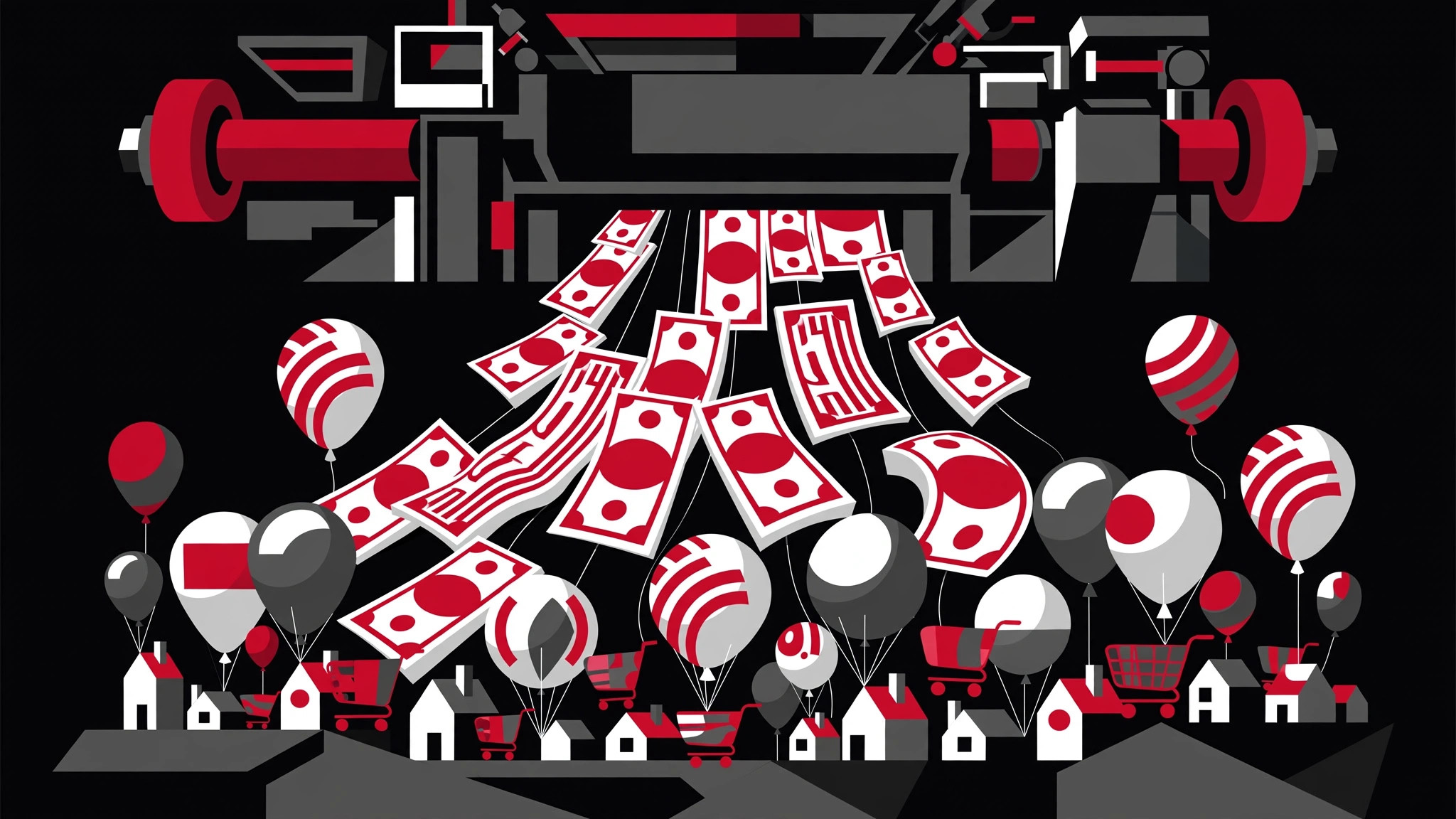
Your bank pays you 0.01% while lending your money at 7%. That's not a glitch — it's the business model.
Banks are earning record net interest margins while paying savers crumbs. Inertia is their most profitable product.
Opinion: this column argues a point of view. It is commentary from the BidAsk opinion desk — not a news report, and not financial advice.

Right now, the average traditional savings account pays somewhere around half a percent — many big banks still pay 0.01%. Meanwhile those same banks are happy to lend money back out via credit cards at 20%+ and mortgages near 7%. The spread between what they pay you and what they charge borrowers is the widest it's been in modern history.
Your bank isn't confused about this. It's counting on you being too busy to notice.
Deposits are funding, and you're the cheapest source
Here's the business in one sentence: banks borrow from depositors at nearly zero and lend at high rates, pocketing the difference. Economists call it net interest margin. You can call it what your grandparents called it: a raw deal.
When the Fed kept rates at zero, banks had a decent excuse — there was no margin to share. But rates rose fast starting in 2022, and deposit rates at the big branch banks barely budged. The banks repriced their loans immediately and their deposits... eventually, partially, maybe. That asymmetry transferred hundreds of billions from savers to bank shareholders. It was the largest quiet wealth transfer of the decade, and it happened one statement cycle at a time.
Inertia is the product
Banks know exactly what they're doing. Switching banks is annoying — new logins, moved direct deposits, re-linked autopay. They price that hassle into your rate. The 0.01% isn't an oversight; it's the calculated maximum they can pay while keeping you from leaving.
And the strategy works beautifully. Trillions still sit in low-rate accounts, funding bank profits, while high-yield savings accounts paying 4% or more are one online signup away. The information is free. The only barrier is an afternoon of paperwork.
The fix takes twenty minutes
This is the rare financial problem with a trivial solution. Open a high-yield savings account at an online bank or credit union. Move your emergency fund and idle cash. Keep your checking where it is if you like the branches — but stop letting your savings subsidize someone else's dividend.
On a $25,000 emergency fund, the difference between 0.01% and 4.5% is more than $1,100 a year. That's not pocket change; that's a vacation, funded entirely by refusing to donate your interest to a bank.
A modest bit of righteous anger is warranted
Banks will tell you they provide value: branches, apps, security. Fine — pay for those with fees you can see, not with an invisible tax on your savings. A business model that depends on customer inattention is a business model that deserves your attention, briefly, once.
Move the money. It takes twenty minutes, and it's the highest hourly wage you'll earn all year.