Sorry, Putin: A Young Heart Won't Keep an Old Body Young
New transplant research shows donor hearts quickly adopt the biological age of whoever receives them — bad news for the organ-replacement theory of longevity.
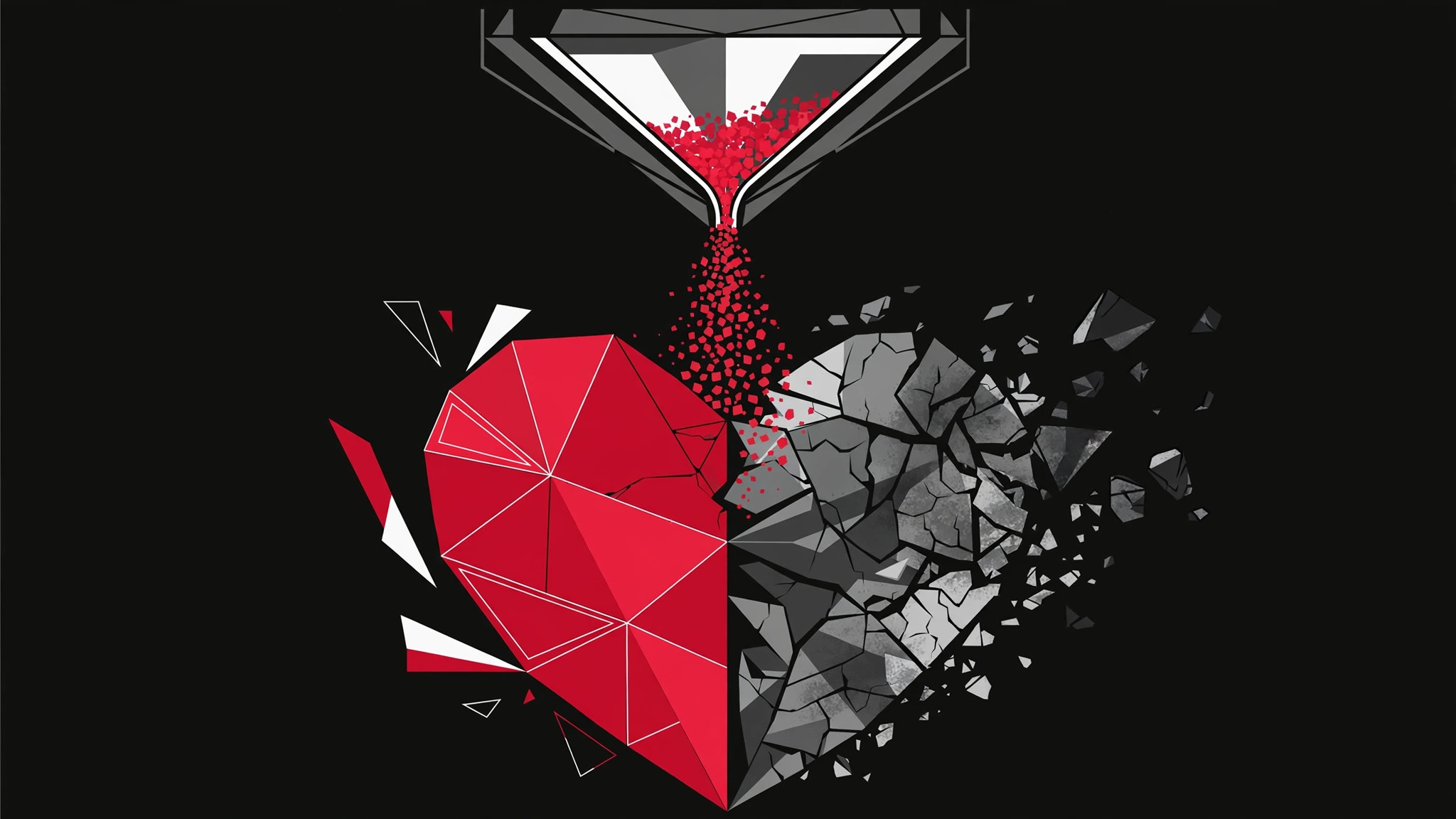
Around this time last year, a hot mic caught Vladimir Putin telling China's Xi Jinping that biotechnology could make people live "younger and younger, and even achieve immortality" through continuously transplanted organs. It was an endorsement of the "replacement" theory of longevity — the idea, supported by experiments in which young mice stitched to old ones seemed to rejuvenate them, that young biology can refresh an old body.
New research pours cold water on that hope. According to MIT Technology Review, studies of transplanted hearts in both mice and humans suggest that a new heart soon adopts the biological age of its recipient — no matter how young the donor was.
The mouse experiment
Jesse Poganik at Brigham and Women's Hospital in Boston set out to test whether young organs, rather than young blood, were the source of rejuvenation. His team performed heart transplants in mice — implanting a second heart in the neck, a simpler procedure that let scientists compare the new heart against the existing one. Some young adult mice received middle-aged hearts; some middle-aged mice received young hearts.
To measure the results, the team used a trio of molecular "aging clocks" that estimate the biological age of tissues. Poganik expected to see a reciprocal effect — young hearts benefiting older animals. Earlier work by his colleagues had found that old hearts in young mice caused a buildup of senescent cells in other organs, hinting that an old organ could prematurely age its host.
Instead, between four and six months after surgery, the transplanted hearts had taken on the biological age of their recipients: young hearts got older, old hearts got younger. The rest of the body — the blood, the other organs, even the original heart — appeared unaffected by the new addition, regardless of the donor's age.
The pattern holds in humans
The finding wasn't limited to mice. People who receive donor hearts undergo regular biopsies afterward, and the tiny tissue samples collected from transplants at Brigham and Women's have been stored for decades. When Poganik's team tested their biological ages with the same clocks, they found the same pattern: no matter the donor's age, a new heart quickly matches the biological age of the person who received it.
Why is still unclear. João Pedro de Magalhães, who studies aging at the University of Birmingham and was not involved in the study, suggested to MIT Technology Review that the recipient's immune system — immune cells circulating in the blood — may affect the aging markers of the new organ. Poganik offered another possibility: any rejuvenating effect of a young heart gets diluted by all the other aged parts of an older body, or perhaps a single organ simply isn't enough.
A practical upside
The result may still help transplant patients. Poganik hopes it will encourage surgeons to consider hearts from older donors, many of which are discarded on the assumption they won't work as well. Organ-preservation machines are already changing that math — and Poganik has worked on another study showing these devices can partly rejuvenate donor livers.
The broader lesson is humility about aging itself. Reversing aging completely, Poganik said, would mean reversing every kind of damage across every cell type at once — "an enormous challenge." Some aspects of biological age are probably reversible, he said; some are probably not. The replacement theory, as Putin imagined it, isn't one of them.
Written by the BidAsk Newsroom. Based on reporting from the sources below.
Which AI tool is actually worth your money?
ToolROI is a free AI-tool ROI calculator for freelancers — compare what tools like Jasper, Copy.ai, Kit, and Semrush really cost you versus what they earn back.
Calculate my ROI →Free tool run by the same publisher as BidAsk. No affiliate links.