The Lab Battery Hit 824 Wh/kg. Turning It Into a Car You Can Buy Is the Hard Part.
Beijing's WeLion New Energy has pushed semi-solid-state cells past triple the energy density of today's lithium-ion — but cost and manufacturability still decide whether the breakthrough leaves the lab.
The battery industry's holy grail isn't hard to describe: a cell that holds far more energy, never catches fire, and costs about the same as what goes into cars today. A Beijing company named WeLion New Energy thinks it's getting close — though by its own account, the finish line is still measured in years, not months.
Why semi-solid-state matters
Today's lithium-ion batteries rely on a flammable liquid electrolyte to shuttle ions between electrodes — the same liquid behind the fire risk that has dogged EVs, phones, and grid installations. Fully solid-state cells swap that liquid for a solid material, which would boost both energy density and safety, but they remain brutally difficult to manufacture at scale.
WeLion has taken the middle path: semi-solid-state cells with a part-liquid, part-solid electrolyte. It's a compromise, but a productive one. According to MIT Technology Review's profile, the company's 2023 battery pack — built with Shanghai EV-maker Nio — reached an energy density of 360 watt-hours per kilogram, against roughly 200 wh/kg for a typical lithium-ion pack today. That translated to a claimed range of more than 1,000 kilometers. The catch: only about 200 of those packs were ever made, because production was expensive. WeLion says Nio is still using them.
More recently, the company's engineers tested a semi-solid-state cell that hit a reported 824 wh/kg — more than triple the density of a standard lithium-ion battery, per the report.
The caveats
Lab results are not products. WeLion declined to share key details about the 2025 prototype — how many charge cycles it survives, how capacity degrades over its lifetime — and the company says commercialization is far off. It also acknowledges a blunt cost problem: its semi-solid-state batteries cost more than conventional lithium-ion cells from giants like CATL, which have scale WeLion can't yet match.
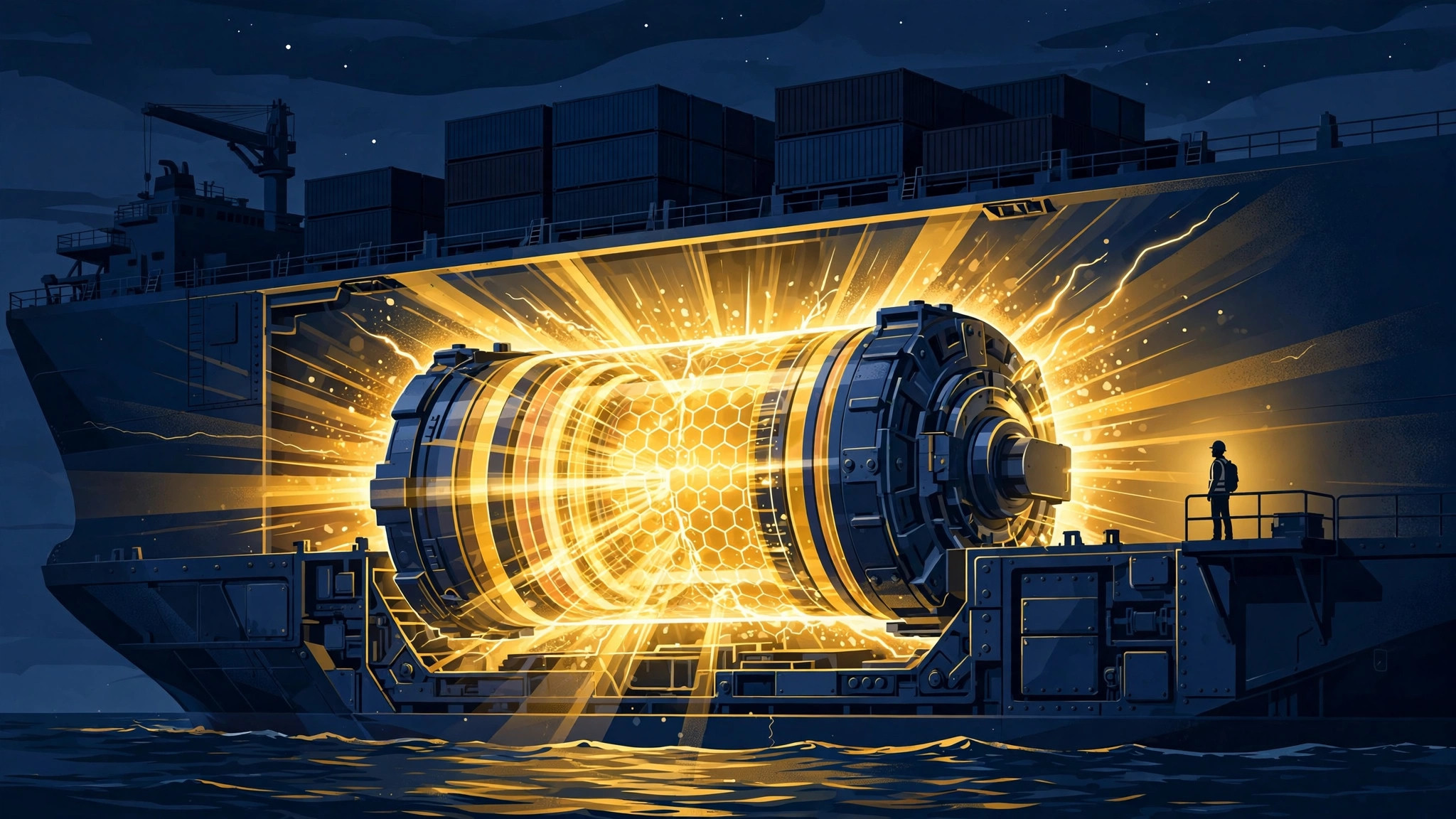
The company's near-term roadmap reflects that reality. Per the profile, WeLion plans a drone battery at 410 wh/kg before the end of this year and its first all-solid-state car battery — rated 400 wh/kg — in 2027. This month, two inland cargo ships running on its batteries are scheduled to launch in Huzhou, each carrying battery packs near 4,000 kilowatt-hours, enough for 250 kilometers of sailing, the company says.
Why it matters beyond cars
MIT Technology Review flags the decarbonization math: transportation accounts for roughly 10% of China's carbon emissions, and emissions from vessels moving goods along the country's inland waterways are projected to grow about 25% this decade, reaching 18.7 million metric tons by 2030. Electric ships on WeLion-powered routes would eat directly into that.
The company currently runs 11 gigawatt-hours of annual manufacturing capacity across four Chinese plants, with two more facilities — another 18 GWh combined — under construction. Scaling up semi-solid-state production cheaply enough to compete in a crowded battery market remains, as the report puts it, WeLion's defining challenge.
Written by the BidAsk Newsroom. Based on reporting from the sources below.
Which AI tool is actually worth your money?
ToolROI is a free AI-tool ROI calculator for freelancers — compare what tools like Jasper, Copy.ai, Kit, and Semrush really cost you versus what they earn back.
Calculate my ROI →Free tool run by the same publisher as BidAsk. No affiliate links.