Industrial AI's next act is physical — and the safety bar just got higher
As foundation models and robots move onto factory floors and power grids, industrial giants are racing to write the safety playbook for AI that touches the real world.
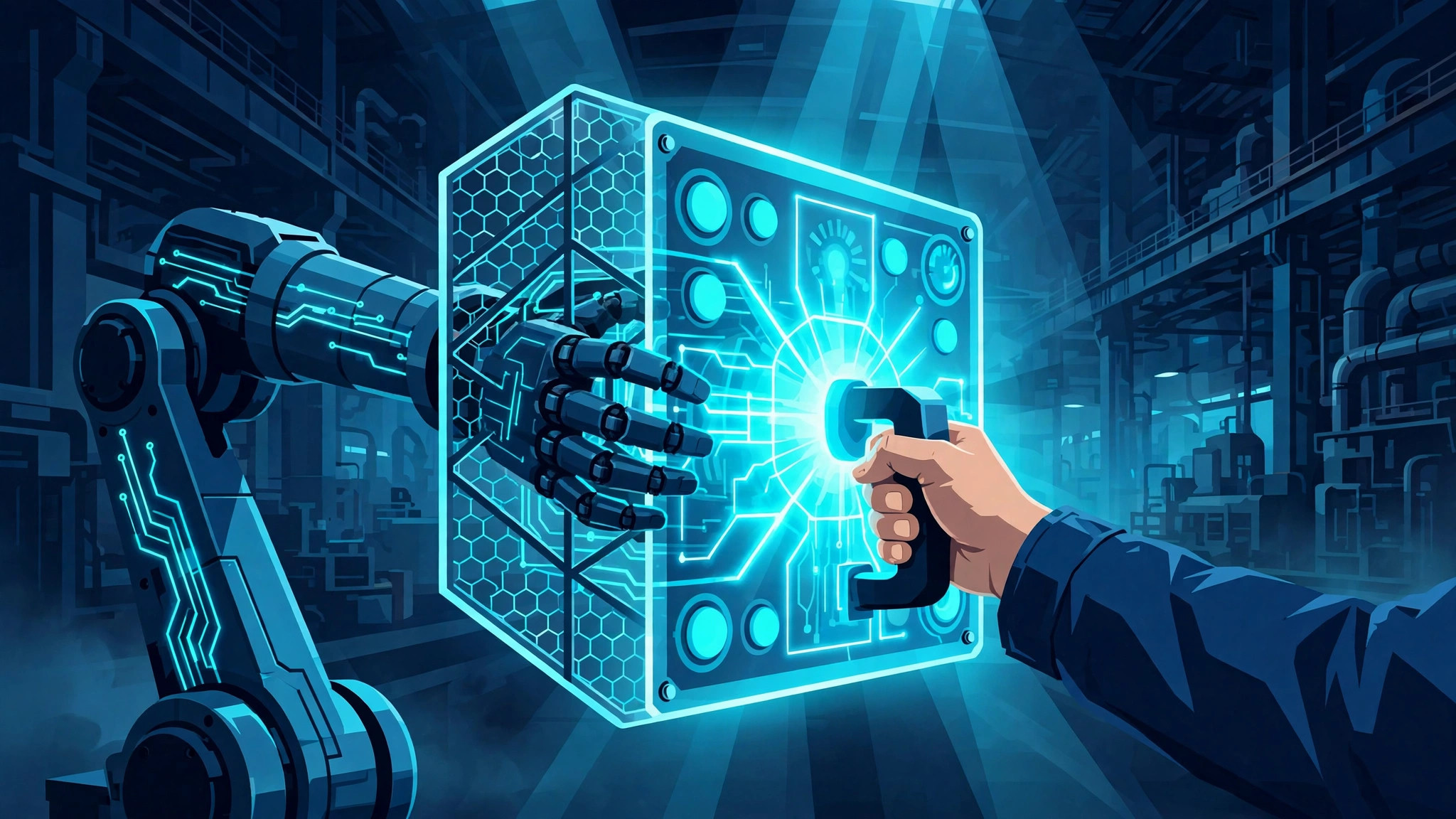
Industrial AI has been around for decades, quietly forecasting equipment failures and tuning production lines. What is changing now is the kind of AI arriving on the scene — and the fact that it can reach out and touch the physical world.
From screens to steel
According to MIT Technology Review, advances in foundation models, so-called physical AI, and agentic systems are making it possible to automate far more complex tasks across industrial environments. That is a real shift: for years, industrial sites leaned on narrow, predictable tools. Now they are experimenting with general-purpose models whose behavior is harder to predict — and harder to explain.
The stakes are different from AI in an office app. Industrial AI interacts directly with physical systems, where an unexpected decision can affect worker safety, equipment reliability, and critical infrastructure, the report notes.
The data problem comes first
Before any autonomy arrives, operators need to make sense of information scattered across telemetry feeds, maintenance logs, and engineering documents. Newer technologies — from graph databases to AI-assisted correlation — are starting to connect those dots faster, giving operators real-time help when diagnosing problems. In the future, robots could gather that data in hazardous environments so workers never have to enter them, according to the piece.
Safety over speed
The central question, in the words of Arti Garg, chief technologist at industrial software company AVEVA: how do companies use these new capabilities while keeping operations safe and reliable? Her answer is governance built for the job — AVEVA's framework centers on security, efficiency, and human safety and oversight, with the explicit principle that AI should augment people in critical decision loops rather than replace them. Guardrails, she argues, must define exactly where automated systems are allowed to act and where human supervisors stay responsible.
That governance question also has a workforce angle: nearly half of the industrial workforce is expected to retire within five years, the report says, taking decades of expertise with them. Capturing that know-how in ways newer workers can use is one of the biggest opportunities in the field.
Counting AI's own footprint
Sustainability cuts both ways. AI can help manage power grids as intermittent renewables grow — Garg's team has partnered with Idaho National Laboratory on grid-resilience research — but organizations also need an honest accounting of AI's own environmental cost. Garg is involved in an IEEE working group developing a standard methodology for measuring that impact across electricity, energy, resources, water, and carbon.
The bottom line from the report: autonomous robots and drones, AI-assisted tools for domain experts, and smarter grids are coming, but realizing their value will mean rethinking business processes and safeguards — not just deploying the technology. (MIT Technology Review produced this report in partnership with AVEVA.)
Written by the BidAsk Newsroom. Based on reporting from the sources below.
Which AI tool is actually worth your money?
ToolROI is a free AI-tool ROI calculator for freelancers — compare what tools like Jasper, Copy.ai, Kit, and Semrush really cost you versus what they earn back.
Calculate my ROI →Free tool run by the same publisher as BidAsk. No affiliate links.