This Ecologist Says Forests Can Heal Themselves — and That Most Tree-Planting Campaigns Are Expensive Mistakes
Daisy Dent has spent two decades showing that animals, not seedlings, are the real reforestation engine — and the carbon-credit market is starting to listen.
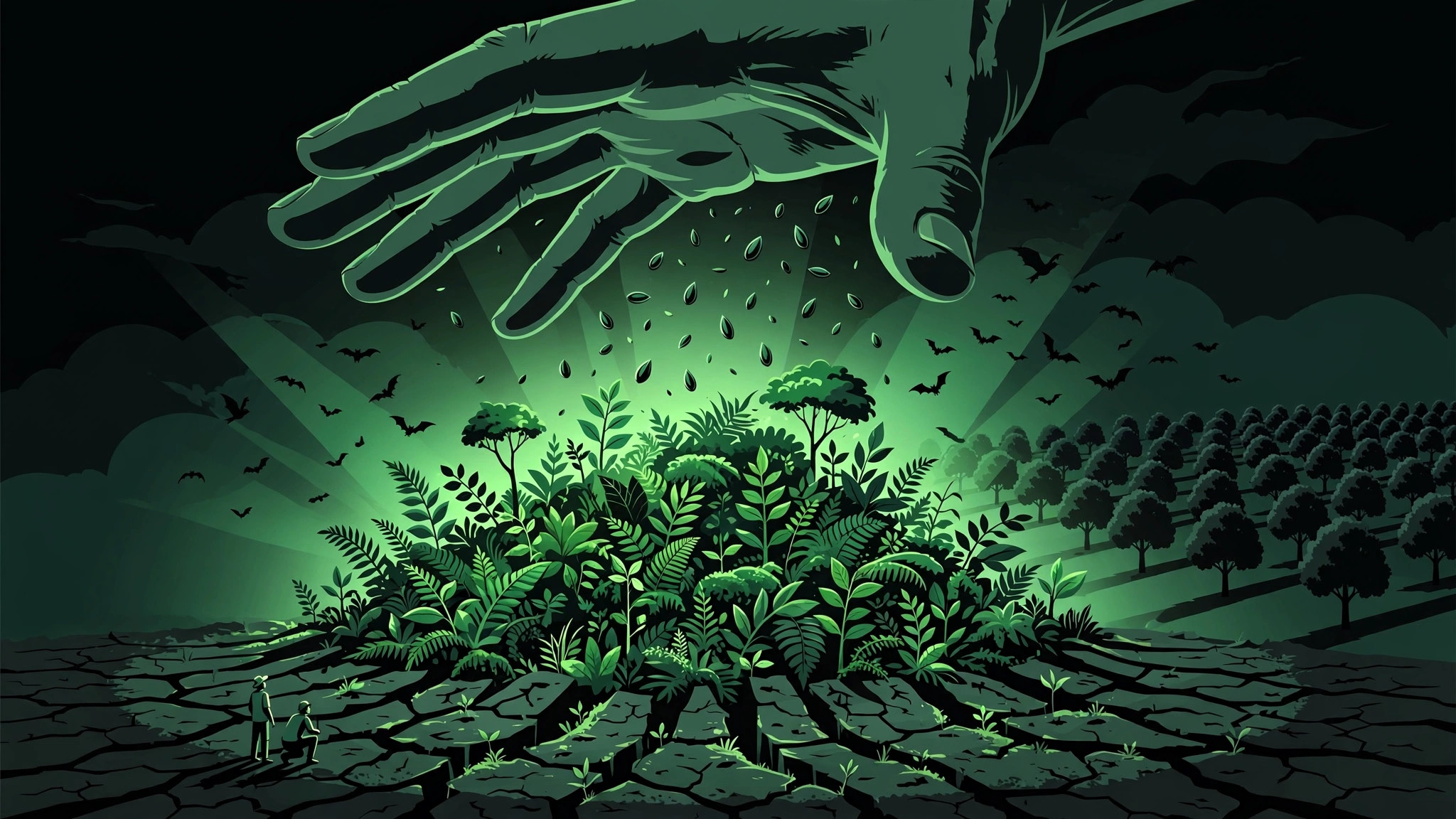
In central Panama, a forest is running a century-long experiment that no one designed. Plots of land at the Barro Colorado Nature Monument have been regenerating naturally for up to a hundred years — no planting crews, no seed bombs, no drones. Senior scientist Daisy Dent, an ecologist at ETH Zurich, has spent years mapping every trunk that emerged, and her findings, as profiled by MIT Technology Review this week, amount to a quiet rebuke of the way the world tries to plant trees.
The animals do the planting
Fruit-eating animals — spider monkeys, bats, parrots — are responsible for planting more than 70% of trees in tropical forests, according to research cited in the piece. Dent's dataset traces which creatures built each patch by depositing seeds in their droppings, and the pattern is clear: diverse forests planted by wildlife recover with stunning structure and richness in a few decades. By contrast, a patch dominated by a single long-lived species, Gustavia superba, reveals what happens when agoutis are the only architects — a homogeneous forest that can crowd out light for 150 years.
The implication is uncomfortable for the carbon-credit industry. For over a decade, Dent has built the evidence that large monocrop planting programs — the cheap-credit favorite — could be expensive mistakes, and that letting resilient forests rebound naturally can re-create ecosystems that absorb vast quantities of CO₂.
The numbers favor the natural way
The research math is striking. A 2016 paper in Nature from Dent's team found that a hectare of naturally regenerated secondary forest captures 11 times as much carbon per year as an old-growth hectare, with young trees absorbing it fast as they race for sunlight, per the profile. A 2024 study, meanwhile, found that plots with as little as 35% of tree cover can regenerate as forest. And a separate 2024 Nature estimate found some 215 million hectares of forest worldwide — an area larger than Mexico — could regenerate naturally.
For investors and corporate buyers, that matters because the price gap in carbon credits is enormous. Credits can be bought for as little as $5 per metric ton, the article notes, while corporate giants such as Microsoft — a client of the carbon-crediting startup Ponterra — have paid more than ten times as much for high-quality removal. Dent and her Yale collaborator Liza Comita are working with Ponterra on assisted natural regeneration projects in southern Panama, where enrichment planting accelerates recovery instead of replacing it.
When leaving alone isn't enough
Dent is not a pure purist about it. Many sites are too degraded to heal themselves, she says — abandoned ranches whose soils were planted with cattle grass can smother young trees before they take root. The playbook her research helps write is about when to let ecosystems regenerate and when to give them a helping hand: mapping corridors to reconnect fragments, reintroducing wildlife to "silent forests," and replanting species that accelerate growth.
With droughts battering Latin America and an El Niño cycle looming, she argues the reckoning for cookie-cutter plantations is coming. "I think there's an increasing recognition that we can't just plant trees. We have to rebuild a system," she told Technology Review. For the carbon market, that shift — from counting seedlings to rebuilding systems — is where the serious money and the serious carbon both live.
Written by the BidAsk Newsroom. Based on reporting from the sources below.
Sources
Which AI tool is actually worth your money?
ToolROI is a free AI-tool ROI calculator for freelancers — compare what tools like Jasper, Copy.ai, Kit, and Semrush really cost you versus what they earn back.
Calculate my ROI →Free tool run by the same publisher as BidAsk. No affiliate links.