Let the AI break the car: the startup stress-testing physical AI before reality does
Laplace Intelligence uses AI agents inside hyper-realistic simulations to find the edge cases that could trip up self-driving cars and robots — before they meet the real world.
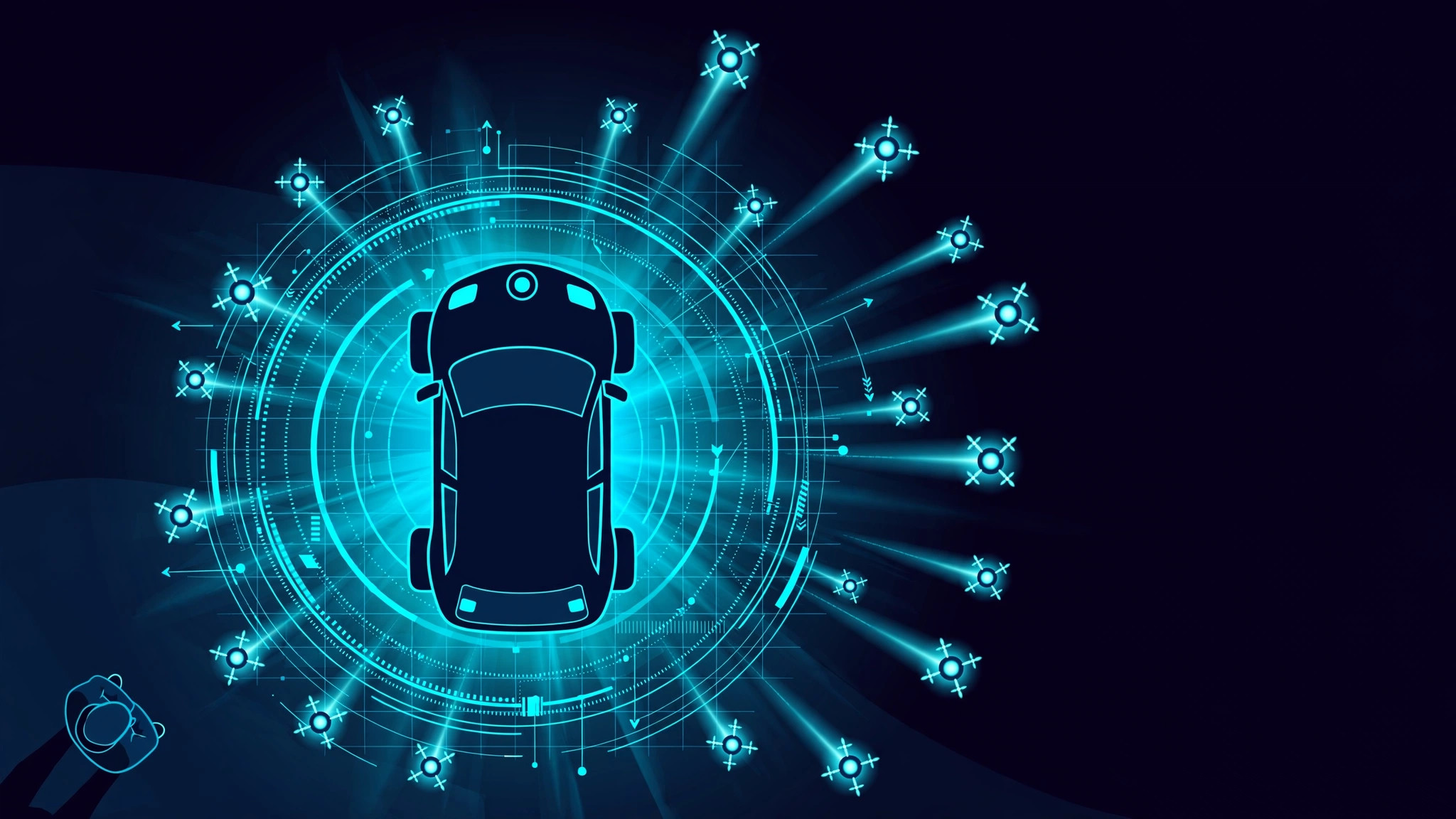
When AI behaves unpredictably inside a computer, the worst case is usually embarrassment. Behind the wheel of a two-ton vehicle, the stakes are different. That asymmetry is the business plan of Laplace Intelligence, an Ann Arbor startup building automated red-teaming for robotics and physical AI — deliberately making machines fail in simulation so they do not fail on the road.
Founded about a year ago out of the University of Michigan by CEO Howie Sun and his former PhD adviser, chief scientist Henry Liu, the company commercializes eight years of academic research. The pair's 2023 paper on challenging autonomous-driving AI in simulation made the cover of Nature — which is when, according to TechCrunch, autonomous vehicle companies started calling.
Simulation grounded in the real world
At the core is a high-fidelity simulation reconstructed from the real world, built as a post-trained version of Nvidia's Cosmos world-simulation platform. It blends real-world map data to recreate environments true to scale — anything from an Arizona highway to a Paris pedestrian crossing — seeded from sources like Google Street View imagery, and adjustable in real time with language prompts such as adding afternoon traffic. Real-time congestion data from navigation providers like TomTom flows in too.
Crucially, not only the environment is simulated. In a demo, Sun had a test agent vehicle swerve into oncoming traffic — and the simulated car in its path moved to avoid the collision. Other road users react, which makes the testing genuinely interactive rather than scripted.
AI that hunts for corner cases
The more distinctive piece is the AI agents Laplace is building to design corner cases on their own — the rare scenarios that could trip up an autonomous system — pulling from news reports and police collision records, and pushing humans further out of the testing loop.
Today, developers mostly train on recorded footage converted into simulation, or rely on people to dream up edge cases. Some rivals use AI to generate scenarios — TechCrunch points to self-driving truck company Waabi — but Sun argues the need becomes sharpest as generalized robots enter the world, where nobody yet knows what the edge cases will be.
A small, profitable contender in a big arena
Despite academic roots and no Silicon Valley pedigree, Laplace is generating revenue and has turned a modest profit, most of it from autonomous-driving use cases. Customers include Japanese trucking manufacturer Isuzu and Texas autonomous trucking firm Bot Auto; Nvidia is also a customer, and the companies, with T-Mobile, are collaborating on a free smart-city pilot for San Jose, California. Laplace is additionally working with early partners building humanoid robots for warehouses.
Contracts are largely project-based, and the startup wants to convert them to recurring revenue while raising money to scale — an effort its appearance at TechCrunch Disrupt this week, as one of 20 companies in the Startup Battlefield 200, is meant to accelerate. The bar is high: rival Applied Intuition has raised $1.2 billion at a $15 billion valuation — and counts Isuzu as a customer too.
Written by the BidAsk Newsroom. Based on reporting from the sources below.
Which AI tool is actually worth your money?
ToolROI is a free AI-tool ROI calculator for freelancers — compare what tools like Jasper, Copy.ai, Kit, and Semrush really cost you versus what they earn back.
Calculate my ROI →Free tool run by the same publisher as BidAsk. No affiliate links.