Microsoft Walked Away From a UK Data Centre. The Grid Stocks Behind the Deal Are the Real Story.
Power, not chips, was the bottleneck in Microsoft's cancelled Nscale deal in Essex — and it has investors looking at the UK's electricity networks and equipment makers instead.
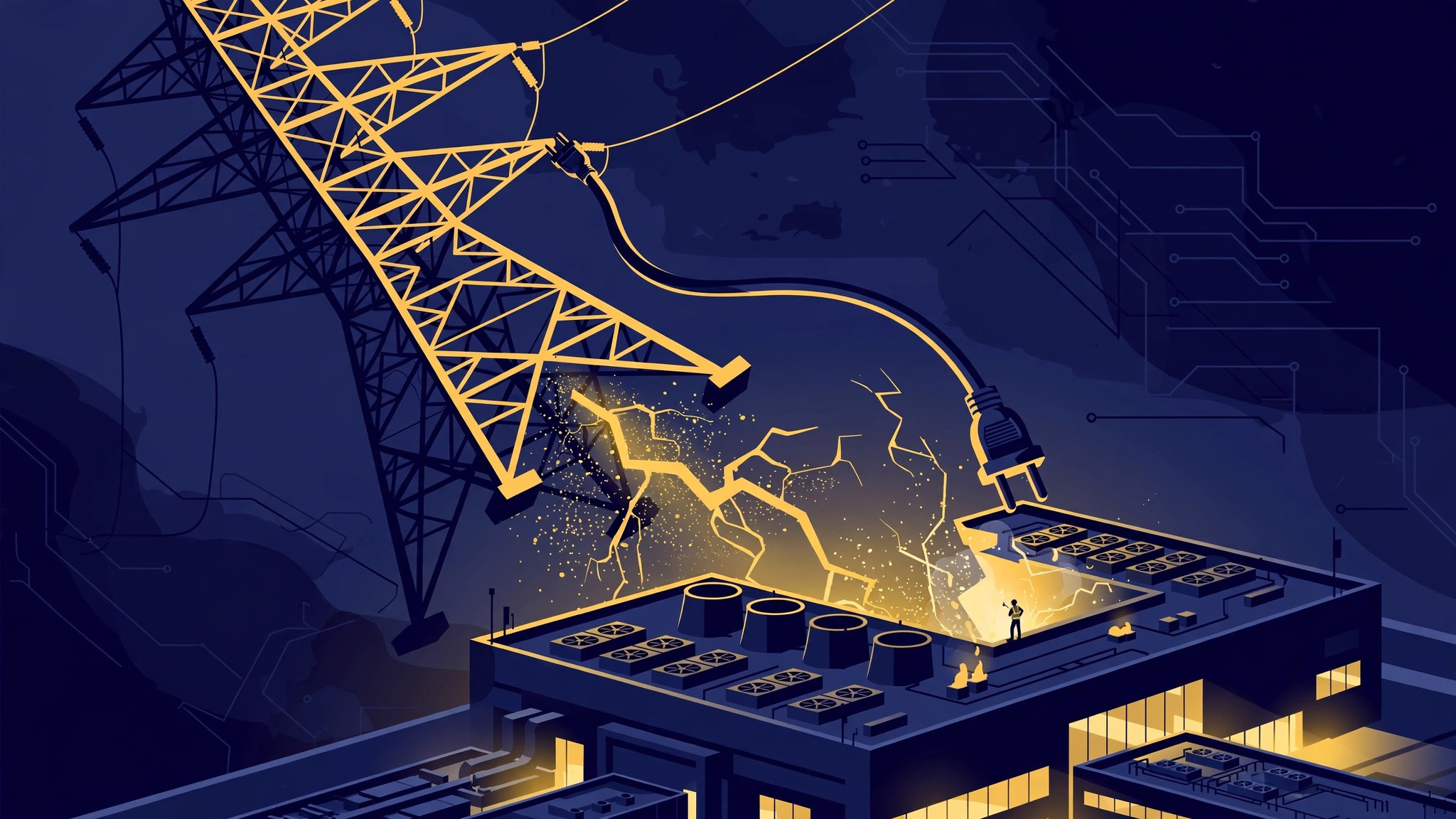
The AI buildout's scarcest resource is turning out to be the oldest one: electricity. This weekend, Microsoft pulled out of its anchor deal with AI infrastructure company Nscale for a data centre in Loughton, Essex — a site meant to house thousands of Nvidia AI chips and come online next year. According to the Telegraph, which broke the story, grid bosses told Nscale the facility might not get a power supply until the 2030s. The deal's collapse throws a spotlight on the unglamorous layer of the AI trade: the UK's power grid, and the companies that keep it running.
The deal that died on grid delay
Microsoft was set to be the anchor tenant at Nscale's first British data centre, having agreed to rent 23,000 Nvidia AI chips there, per the Telegraph's reporting. The project formed part of the £22bn in UK investments Microsoft pledged during Donald Trump's state visit — an announcement Prime Minister Keir Starmer framed as Britain's bid to become a world leader in AI. Instead, the project stalled on electricity. Nscale's Norwegian flagship data centre is also running roughly six months behind schedule, according to Investing.com, and the company is pressing ahead with plans for a US flotation reportedly targeting up to $35bn.
The fallout is wider than one site. Microsoft accounts for more than 40% of Nscale's $103bn in contracted revenue, according to the Telegraph, and Nscale's IPO ambitions may now get harder. The setback echoes other recent wobbles in AI infrastructure financing — CoreWeave's shares dropped roughly 25% last week, and Australian developer Firmus scrapped its own listing.
Three UK grid names to watch
With neocloud operators fighting for funding, Simply Wall St points investors toward the companies that own the "on switch" — electricity networks and equipment providers:
Drax Group (LSE: DRX) — Britain's biggest renewable generator, with a £2.6bn market cap, supplying dispatchable low-carbon power and grid support services. The company is building out more than 700MW of battery storage backed by roughly £500m in committed capital, with battery system services targeted to contribute £50–100m of EBITDA by 2029, according to Simply Wall St's analysis. The key uncertainty: policy risk and capital spending as its grid role evolves.
Volex (LSE: VLX) — The £1.2bn cable maker supplies the heavy-duty power cabling and data-centre interconnects — up to 800 gigabits per second products — that turn new AI halls and substations into working assets. Rapid AI infrastructure buildout is lifting demand for high-speed copper interconnects, supporting a richer product mix and margins.
Invinity Energy Systems (AIM: IES) — A £101m small-cap selling vanadium flow batteries that sit directly on the grid, smoothing power when data-centre loads surge or renewables dip. The standing risk, Simply Wall St flags, is raw-material access: the batteries depend on vanadium supply chains, which will shape long-term storage costs and contract terms.
Why power investors matter now
The Nscale episode makes the thesis concrete: a data centre with no grid connection is a very expensive empty building. Microsoft and Anthropic account for roughly 85% of Nscale's contracts, per its IPO filing — concentration that makes every cancelled commitment painful. As AI infrastructure deals live or die on power delivery, the grid enablers behind them may be the calmer way to play the theme.
This article is for informational purposes only and is not financial advice.
Written by the BidAsk Newsroom. Based on reporting from the sources below.