Wave-Powered AI? Two Small Companies Want to Put Data Centers on the Ocean
Ocean Power Technologies and Stratum Holdings signed a non-binding agreement to test whether buoys powered by waves, wind and sun can run AI computing offshore — no deal, no deadline and no deployment site yet.
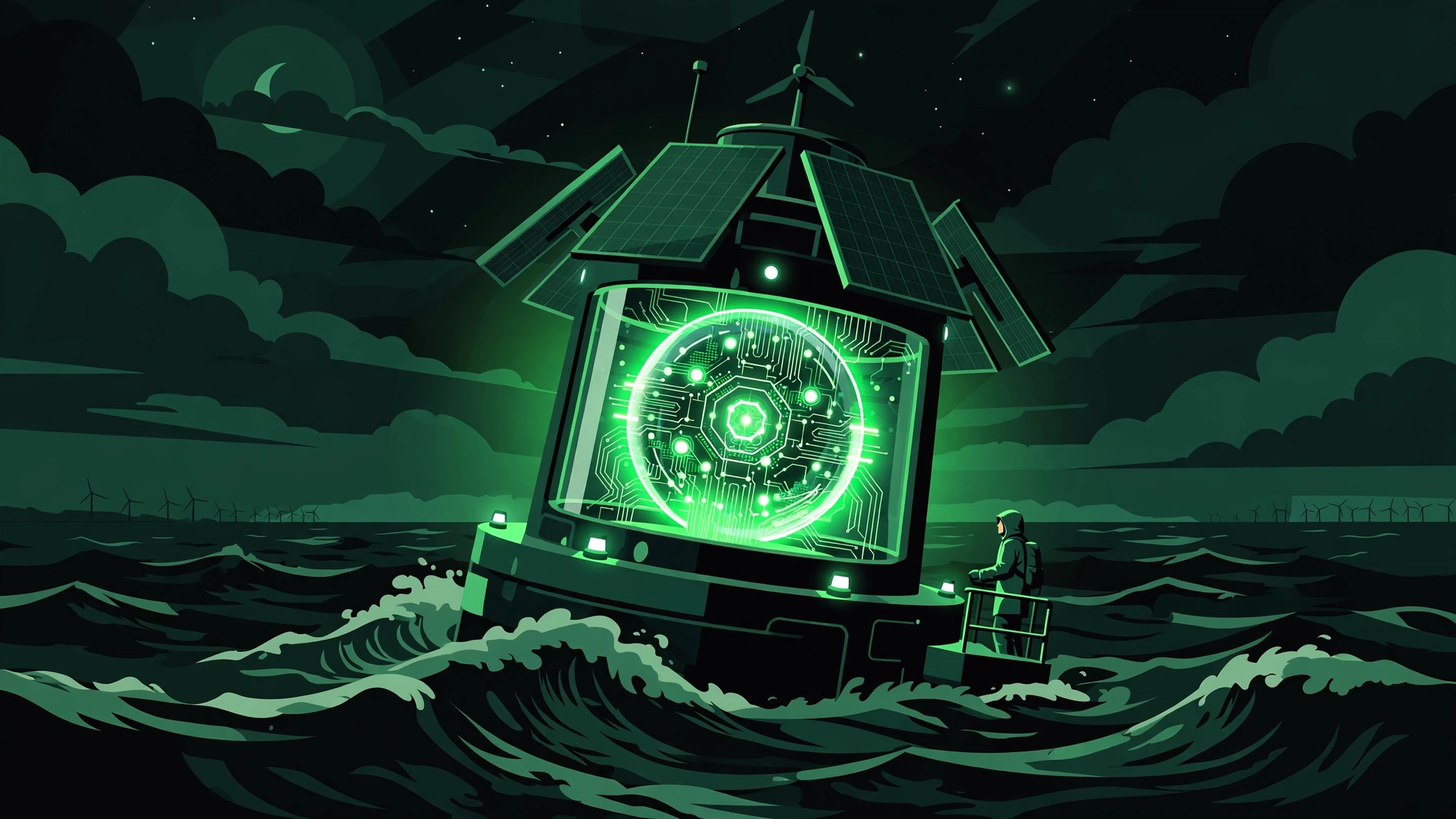
Two small public companies want to find out whether artificial intelligence can run at sea, powered by the ocean itself. Ocean Power Technologies and Stratum Holdings announced on Monday that they have signed a non-binding letter of intent to test offshore, renewable-powered computing — an idea that is intriguing, unproven, and still a long way from a signed deal.
What each side brings
Under the contemplated arrangement, Ocean Power Technologies would contribute its PowerBuoy platforms and patent portfolio, according to the announcement. That includes a limited, non-exclusive licence to certain PowerBuoy patents for the demonstration, plus prototype buoys already on hand. The company holds more than 60 issued PowerBuoy patents worldwide, including more than 15 in the United States, covering buoy design, energy conversion, mooring and related systems.
Stratum, an AI infrastructure company focused on GPU leasing, would supply computing hardware — including its latest-generation NVIDIA B300 graphics processors — along with integration expertise. It would also pay Ocean Power a monthly retainer under the future definitive agreements, though the announcement does not state the amount.
The idea being tested
The goal is to check whether PowerBuoy platforms paired with Stratum's computing hardware can host edge AI work — processing done close to where data is generated — using mainly power generated on board from waves, wind and sun, with no cable back to shore. Early work would focus on integrating the systems, validating performance and collecting data from demonstration deployments.
A second hypothesis will also be put to the test: whether placing the buoys in cooler ocean regions cuts the energy needed for cooling, one of a data centre's biggest power draws. The announcement is explicit that this has not yet been demonstrated.
If the tests work, the companies say the results could point toward future uses in maritime monitoring, offshore energy observation, scientific sensing and other remote computing jobs. That is a big "if": the announcement names no deployment site, no timetable for definitive agreements and no date for the demonstration itself.
Why the caution matters
The non-binding status is the most important detail in the announcement. A letter of intent is a statement that two companies intend to negotiate, not a contract to build anything. Investors reading the headline as a done deal would be getting ahead of the facts.
Still, the logic behind the experiment is easy to follow. Data centres are hungry for power and cooling, and both are expensive on land. The ocean offers renewable energy and natural cooling in the same place — if the engineering holds up in rough water, salt air and isolation. Ocean Power's chief executive framed the effort as a step toward self-powered edge AI infrastructure that does not depend on shore-based power, while Stratum's chief executive pointed to local processing cutting bandwidth needs and tapping the marine environment's cooling advantages.
For now, that is a hypothesis with a press release attached, not a product. The test will be whether a definitive agreement ever follows — and whether a buoy in open water can keep powerful AI chips running on nothing but waves, wind and sun.
Written by the BidAsk Newsroom. Based on reporting from the sources below.