Warming Is Feeding Itself — and Our Climate Forecasts Are Missing It
New research shows feedback loops from thawing permafrost, wildfires and warming wetlands could add up to 0.4 degrees of extra warming this century — a gap today's climate models largely ignore.
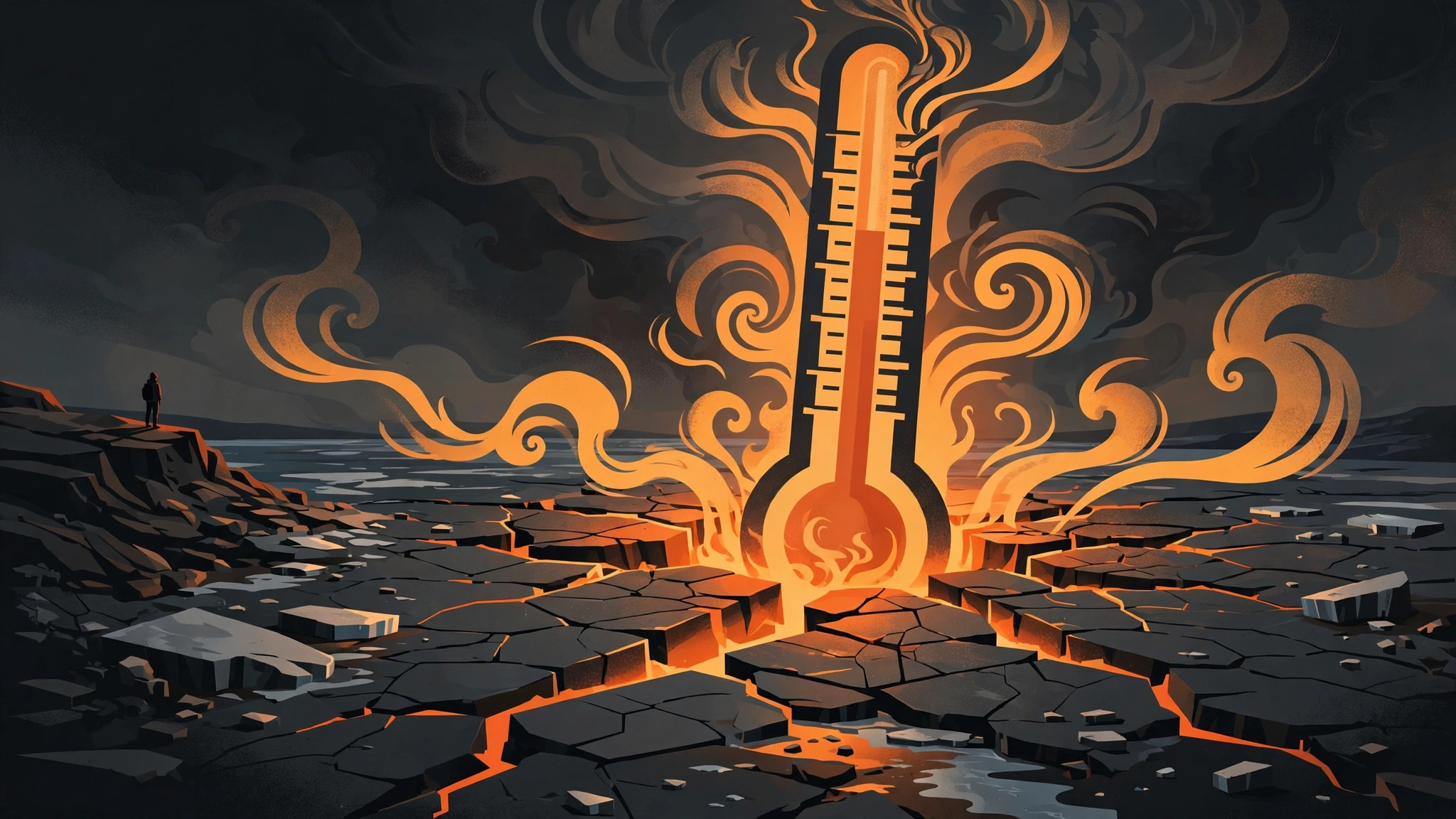
The planet is not just warming because of the greenhouse gases people emit. It is warming because warming itself releases more greenhouse gases — and, according to MIT Technology Review, the models that guide global climate policy still leave much of that self-reinforcing cycle out of the picture.
The feedback loop hiding in plain sight
A study published in September in Environmental Research Letters, which pulled together earlier research, found that extra carbon dioxide and methane from thawing permafrost, intensifying wildfires, hotter lakes and reservoirs, and wetter, warmer wetlands could push global temperatures up by an additional 0.2 to 0.4 degrees Celsius this century — on top of the roughly 2.6 degrees above preindustrial levels that modelers already expect through 2100. The result, according to the report, would be far longer heat waves in many cities and flooding affecting hundreds of millions of people.
A gap in the models that shape policy
None of the models behind the major United Nations climate reports fully account for these feedback effects, according to MIT Technology Review. Many of them incorporate none at all. That leaves a large blind spot in estimates of how much the world could actually warm in the coming decades — and how quickly nations need to cut emissions to stay within critical limits.
A separate analysis published in March in One Earth examined what the feedback problem means for international climate goals. It concluded that just three regional sources — thawing permafrost, more fires in boreal forests, and warming tropical wetlands — could shorten by as much as a quarter the time before the planet consistently crosses the 1.5-degree and 2-degree thresholds.
Work to close the gap — and a simpler answer
Some of that work is already under way. Spark has launched an initiative, the Warming-Induced Greenhouse Gas Emissions Model Intercomparison Project, through which more than 20 international teams are running the same analyses on different models. Researchers involved hope the UN will fold those results into its next major climate assessment, due out in 2029.
Researchers are also exploring ways to tame feedback emissions directly: Woodwell Climate Research Center scientists are investigating whether fires can be prevented or extinguished quickly when they threaten vegetation and soil insulating carbon-rich permafrost, and the Environmental Defense Fund's Climate Innovation Initiative has backed lab research into adding sulfate, iron or other compounds to wetlands to counter rising methane. Several startups are looking into suppressing lightning strikes that ignite high-latitude fires, laying synthetic mats over permafrost, and deploying drones to put out high-emissions fires early.
But those ideas are only in their earliest stages, according to the report, and it is far from clear how much of a dent any of them could make. The surest way to limit warming-driven warming, it concludes, remains the one long understood: breaking society's reliance on fossil fuels.
Written by the BidAsk Newsroom. Based on reporting from the sources below.
Which AI tool is actually worth your money?
ToolROI is a free AI-tool ROI calculator for freelancers — compare what tools like Jasper, Copy.ai, Kit, and Semrush really cost you versus what they earn back.
Calculate my ROI →Free tool run by the same publisher as BidAsk. No affiliate links.