DARPA's $73 million bet on shelf-stable synthetic blood
A new military research program wants to dry blood's key components into powders that last years on a shelf — and beat the 36-minute transfusion clock.
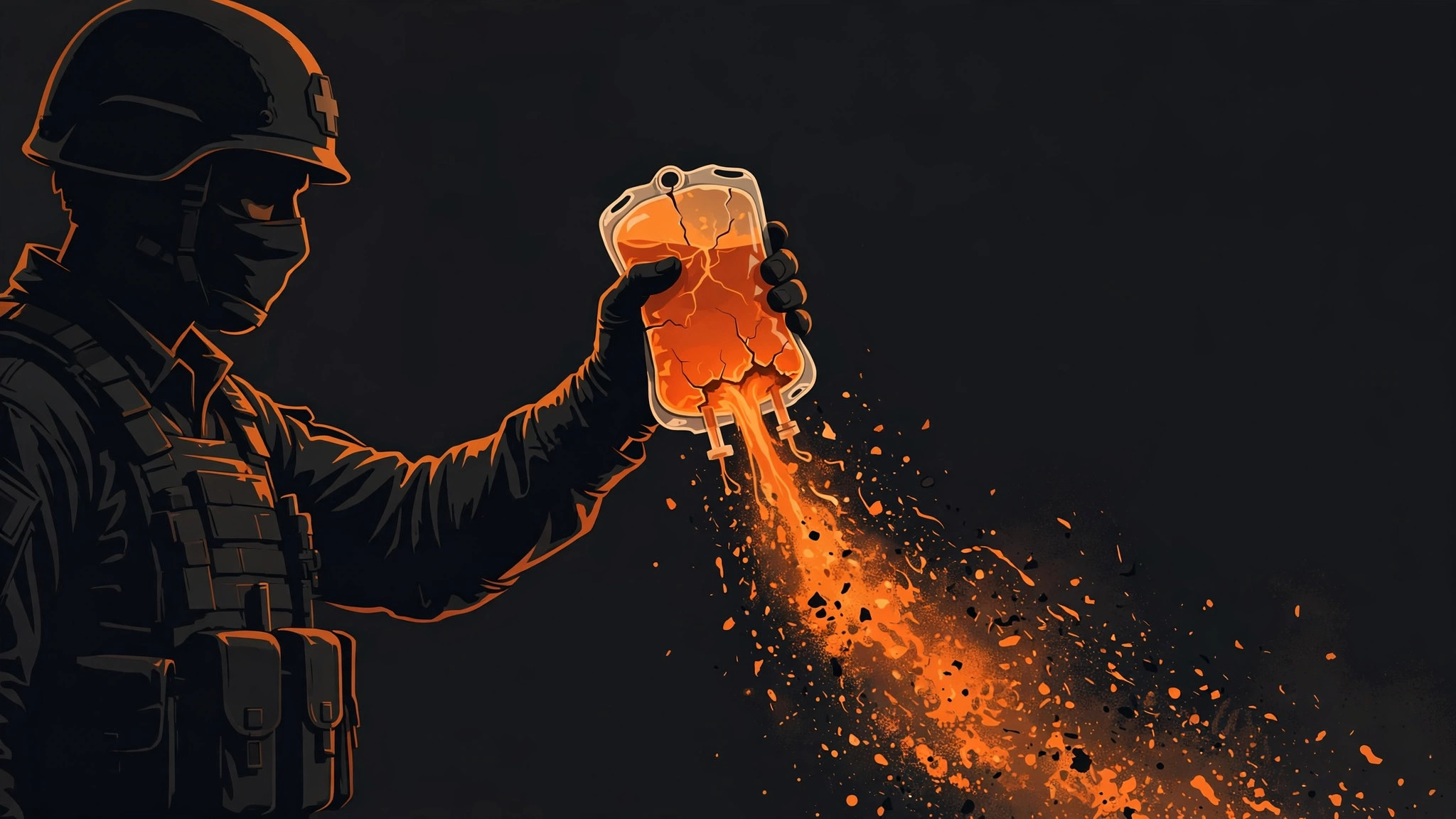
In February 2007, an evacuation helicopter flying a daylight "blood run" in Iraq was hit by a missile, killing all seven crew members. As reported by MIT Technology Review, the tragedy — studied by Navy officer and now DARPA program manager Robert Murray — crystallized the military's blood problem: hemorrhage causes roughly 90 percent of preventable battlefield deaths, yet blood is one of the hardest medical supplies to keep ready.
The shortage is not only military. A 2025 study in the journal Transfusion found that of 1.2 million U.S. trauma patients who potentially needed blood before reaching a hospital, just 1 percent received it. The American College of Surgeons estimates about 10,000 preventable deaths a year in the United States from the shortfall — with the global figure likely in the millions.
The 36-minute problem
Blood is a terrible thing to store. Whole blood lasts about 35 days refrigerated; platelets expire within roughly a week at room temperature; frozen red cells and plasma spoil within days of thawing. And a JAMA study of combat injuries in Afghanistan points to a decisive 36-minute window to begin a transfusion. Blood that must be thawed ahead of an unpredictable attack simply cannot be stockpiled against it.
That is the target of RAPIID, a $73 million DARPA program getting underway late this year to create shelf-stable versions of the three major transfusion components: plasma, platelets, and red blood cells, with fielded kits aimed for 2029. It follows an earlier $47.5 million DARPA project whose researchers reported promising animal results.
Three components, three puzzles
Plasma is the easy one: freeze-dried plasma was used on World War II battlefields, and the FDA has cleared two types for emergency military use in the past two years — one of which civilians can receive. Platelets are harder; the furthest along is Cellphire, which freeze-dries actual human platelets and has shown safety and efficacy in human trials, though its donor dependence raises scale questions.
Red blood cells carry the darkest history. In the 1990s, a hemoglobin-based oxygen carrier called HemAssist saw 24 of 52 trial recipients die versus 8 of 46 in the control group, ending the program. The new generation attacks the problem differently: KaloCyte's ErythroMer seals hemoglobin inside a lipid nanoparticle that acts as an artificial cell membrane, avoiding the vessel constriction that sank earlier efforts. It freeze-dries into powder stable for two years at room temperature. For platelets, DARPA is backing SynthoPlate, a synthetic platelet with peptide attachments that latch onto injury-site chemistry — stable for over a year at room temperature, and at least three months at 122°F.
Even supporters urge patience. As one veteran combat surgeon noted, each component is individually a massive undertaking — and how they work together remains an open question. But with a single blood bank on Okinawa serving tens of thousands of personnel across the Pacific theater, the Pentagon's pressure to solve it is not going away.
Written by the BidAsk Newsroom. Based on reporting from the sources below.